

We extend our heartfelt gratitude to our sponsors and contributors who make this journey possible. Your generous support allows us to preserve and share the world’s stories, connecting cultures and generations through the timeless art of storytelling. Because of you, we can maintain this platform, expand our collection, and bring these narratives to a wider audience. Your belief in our mission inspires us to continue this important work. Thank you for being a vital part of our community and for helping us keep the world’s stories alive. We couldn’t do it without you!
Check out our BENEFACTORS !
Storytelling is a fundamental human practice, connecting us across cultures and time. Originating as a survival tool, stories preserved vital knowledge and encoded lessons, shaping values and traditions. They reflect the human soul, allowing us to confront fears, explore aspirations, and understand ourselves through the struggles of characters. Legends, like those of King Arthur or indigenous myths, anchor identities, offering belonging and continuity, especially in times of upheaval.
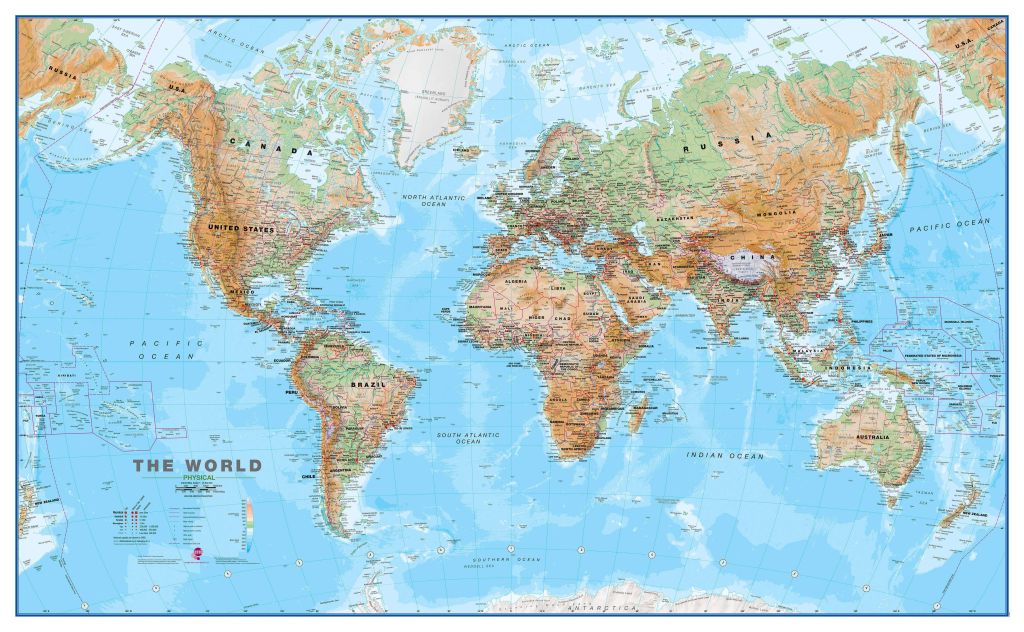
Stories from the past ground us in a rapidly changing world, bridging generations and fostering empathy. They remind us of universal truths and inspire reflection on history’s lessons. Modern storytelling, from films to digital media, evolves while preserving its essence, connecting diverse voices and democratizing narratives.
Beyond entertainment, stories heal, offering catharsis and fostering resilience in individuals and communities. Ultimately, storytelling is a journey into our shared humanity, uniting us in a timeless narrative. Through stories, we explore who we are, where we come from, and the enduring truths that bind us.
North America
In the United States and Canada, ethnographers commonly classify Indigenous peoples into ten geographical regions with shared cultural traits, called cultural areas. Greenland is part of the Arctic region. Some scholars combine the Plateau and Great Basin regions into the Intermontane West, some separate Prairie peoples from Great Plains peoples, while some separate Great Lakes tribes from the Northeastern Woodlands.
Cultural Regions of North America:
North: Arctic, Sub-arctic
Central: Plains
East: NorthEast Woodlands, SouthEast
West: Pacific NorthWest Coast, Plateau, Great Basin, California, SouthWest
▼ See the map…

Central and South America
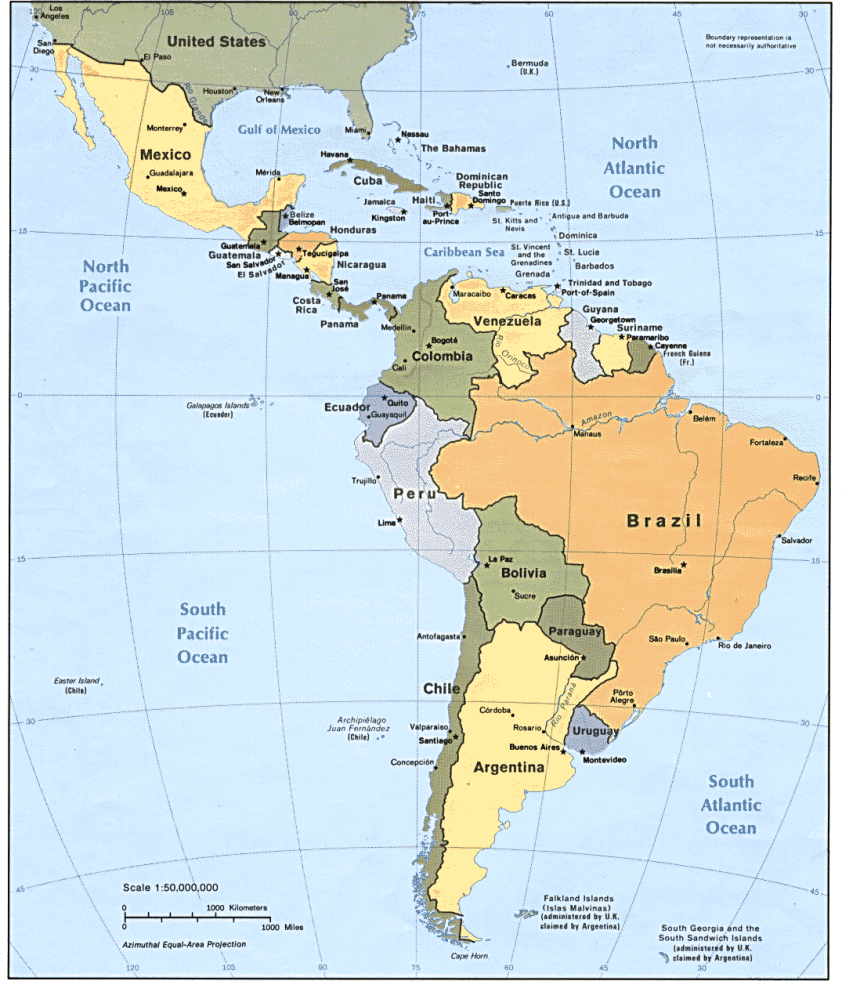
Central America is a subregion of North America. Its political boundaries are defined as bordering Mexico to the north, Colombia to the southeast, the Caribbean to the east, and the Pacific Ocean to the southwest. Central America is usually defined as consisting of seven countries: Belize, Costa Rica, El Salvador, Guatemala, Honduras, Nicaragua, and Panama.
South America is bordered on the west by the Pacific Ocean and on the north and east by the Atlantic Ocean; North America and the Caribbean Sea lie to the northwest. The continent includes twelve sovereign states: Argentina, Bolivia, Brazil, Chile, Colombia, Ecuador, Guyana, Paraguay, Peru, Suriname, Uruguay, and Venezuela; two dependent territories: the Falkland Islands and South Georgia and the South Sandwich Islands; and one internal territory: French Guiana.
▼ See the map…
Asia
Since the 18th century, Asia has been divided into several subregions. There has been no universal consensus on the use of these terms.
The regions of Asia include:
Central Asia
Commonly understood as comprising Kazakhstan, Kyrgyzstan, Tajikistan, Turkmenistan, and Uzbekistan.
East Asia
Commonly understood as comprising China, Hong Kong, Japan, Macau, Mongolia, North Korea, South Korea, and Taiwan. A common synonym for East Asia is Northeast Asia, although some geographers only include Japan, Korea, and Northeast China in this subregion.
South Asia
Commonly understood as comprising Afghanistan, Bangladesh, Bhutan, British Indian Ocean Territory, India, Maldives, Nepal, Pakistan, and Sri Lanka. A common approximate synonym for South Asia is the Indian subcontinent which excludes Afghanistan.
Southeast Asia
Commonly understood as comprising Brunei, Cambodia, Christmas Island, Cocos (Keeling) Islands, East Timor, Indonesia, Laos, Malaysia, Myanmar, Philippines, Singapore, Thailand, and Vietnam. This subregion can be further subdivided into two smaller subregions: Mainland Southeast Asia (Indochinese Peninsula) and Maritime Southeast Asia (Malay Archipelago).
Western Asia
Commonly understood as comprising Armenia, Azerbaijan, Bahrain, Cyprus, Georgia, Iran, Iraq, Israel, Jordan, Kuwait, Lebanon, Oman, Palestine, Qatar, Saudi Arabia, the Sinai Peninsula (Egypt), Syria, Turkey, United Arab Emirates, and Yemen. Common synonyms for Western Asia are Southwest Asia and the Middle East. The Middle East generally includes Egypt, a transcontinental country between Africa and Asia.
North Asia
Commonly understood as comprising Asian Russia. A common synonym for North Asia is Siberia.
▼ See the map…

Europe
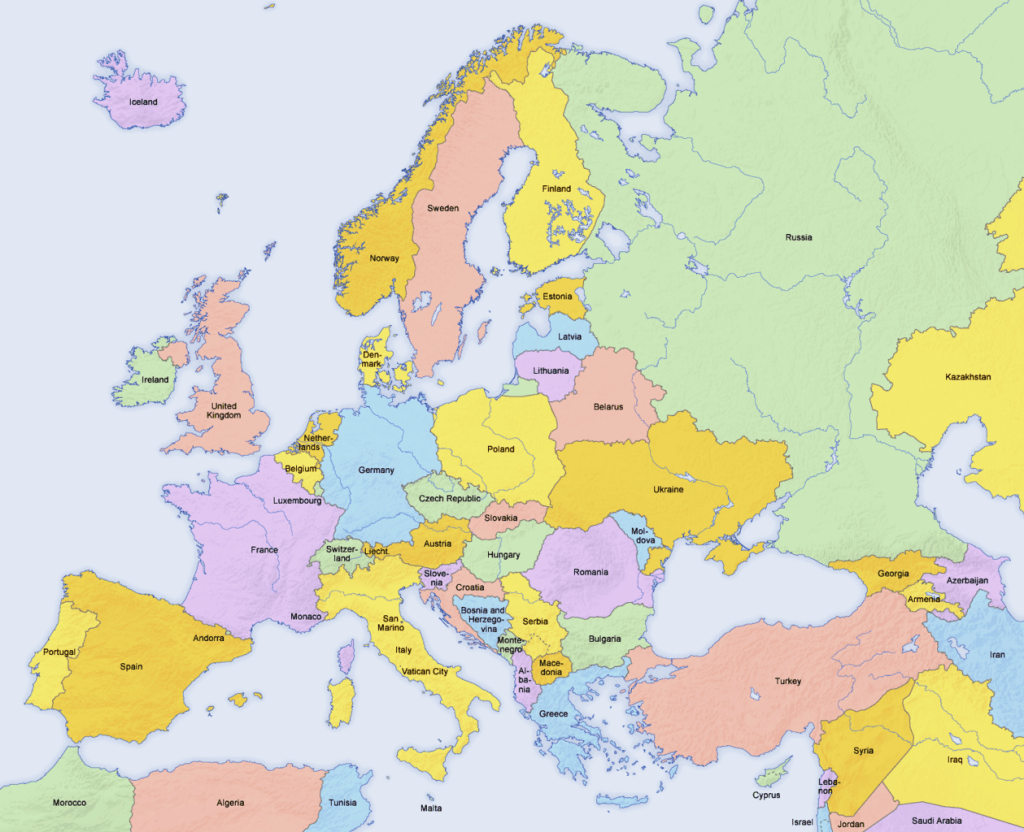
Europe, the westernmost portion of Eurasia, is often divided into regions and subregions based on geographical, cultural or historical factors. Since there is no universal agreement on Europe’s regional composition, the placement of individual countries may vary based on criteria being used.
The list of countries of Europe in alphabetical order:
Albania, Andorra, Armenia, Austria, Azerbaijan, Belarus, Belgium, Bosnia and Herzegovina, Bulgaria, Croatia, Cyprus, Czechia, Denmark, Estonia, Finland, France, Georgia, Germany, Greece, Hungary, Iceland, Ireland, Italy, Kazakhstan, Kosovo, Latvia, Liechtenstein, Lithuania, Luxembourg, Malta, Moldova, Monaco, Montenegro, Netherlands, North Macedonia, Norway, Poland, Portugal, Romania, Russia, San Marino, Serbia, Slovakia, Slovenia, Spain, Sweden, Switzerland, Turkey, Ukraine, United Kingdom (UK), Vatican City
▼ See the map…
Africa
Africa is the largest of the three great southward projections from the largest landmass of the Earth. Separated from Europe by the Mediterranean Sea, it is joined to Asia at its northeast extremity by the Isthmus of Suez (transected by the Suez Canal), 163 km (101 mi) wide. Geopolitically, Egypt’s Sinai Peninsula east of the Suez Canal is often considered part of Africa as well.
▼ See the map…

Oceania
Oceania is a geographical region including Australasia, Melanesia, Micronesia, and Polynesia. Outside of the English-speaking world, Oceania is generally considered a continent, while Mainland Australia is regarded as its continental landmass. Spanning the Eastern and Western hemispheres, at the centre of the water hemisphere, Oceania is estimated to have a land area of about 9,000,000 square kilometres (3,500,000 sq mi) and a population of around 44.4 million as of 2022.

Finally…
At its heart, storytelling is a journey into the human soul. It allows us to explore the depths of our emotions, connect with our shared humanity, and find meaning in an ever-changing world. Legends and stories from the past are particularly powerful because they remind us of our roots and provide a foundation for building the future.
In a world often characterized by division and uncertainty, storytelling offers a unifying force. It invites us to see ourselves in others and to recognize the timeless truths that bind us all. Through stories, we journey not only into the past but also into the essence of what it means to be human. And in doing so, we come to understand that our lives, too, are part of a larger, ongoing narrative—one that began long before us and will continue long after we are gone.

Disclaimer
This site includes citations from historical sources, some of which were written in a time when language, societal norms, and attitudes differed significantly from those of today. As such, readers may encounter terms, expressions, or viewpoints that are outdated, politically incorrect, or offensive by modern standards.
These citations are presented in their original form to preserve the historical authenticity and integrity of the sources. Editing or altering them would risk misrepresenting the context in which they were written and could obscure important aspects of the cultural and intellectual history they reflect. Understanding the evolution of language and societal attitudes is a critical part of studying history and culture, allowing us to engage meaningfully with the past while fostering greater awareness of how far we have come—and how far we still need to go.
It is not the intention of this site to endorse or perpetuate any harmful views or stereotypes. Instead, these historical materials are included to provide an accurate picture of the cultural, intellectual, and social frameworks of their time. We believe that examining history in its unvarnished form helps us to learn from it, enabling respectful dialogue and deeper understanding.
We encourage readers to approach these texts with an open mind, recognizing their value as historical artifacts while reflecting on their implications in our ongoing journey toward equality, respect, and progress.
 Dreamtime Whispers
You must be logged in to post a comment.