
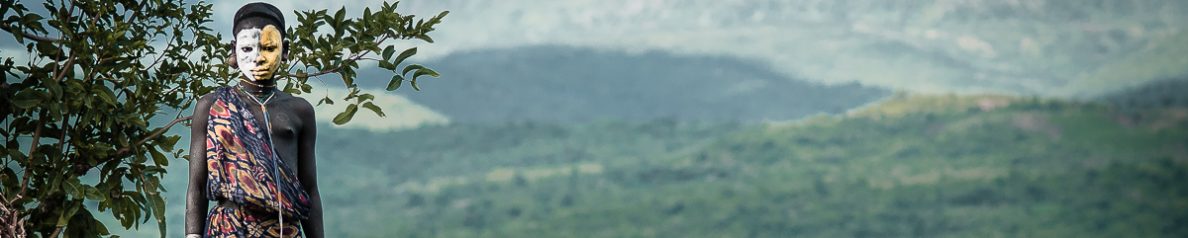
The tale of Uchatngiak intertwines themes of curiosity, love, and transformation. Born into seclusion, Uchatngiak defies restrictions, experiencing life, love with a mystical goose-woman, and fatherhood. Betrayed by societal prejudice, his wife leaves, prompting Uchatngiak’s relentless quest for reunion. His journey unveils magical encounters and the enigmatic “Bird Heaven.” In a tragic twist, he transforms into a white whale, blending mythology with profound allegorical depth.
Source
Tales from Kodiak Island
collected by F.A. Golder
The Journal of American Folklore
Vol. 16, No. 61, Apr. – Jun., 1903
► Themes of the story
Transformation: Uchatngiak undergoes a significant metamorphosis, ultimately becoming a white whale.
Quest: Uchatngiak embarks on a relentless journey to reunite with his wife and son, encountering various challenges along the way.
Tragic Flaw: Uchatngiak’s insatiable curiosity and defiance of restrictions set the stage for his eventual downfall.
► From the same Region or People
Learn more about the Aleut people
These tales were obtained by the author at Unga Island, Alaska, during a three years’ residence. They were told in the Russian language by Mrs. Reed, Nicoli Medvednikoff, Corneil Panamaroff, all natives of the island of Kodiak where they had heard them, and translated some literally, others more freely. The natives of Kodiak speak Russian almost as freely as they do their mother tongue. They call themselves “Aleuts,” and wherever that word is used, it refers to them, and not to the real Aleuts to the west. The author has but lately returned from Alaska.
It was a very large settlement, and over it presided only one chief. This chief had a son whom, from babyhood, he kept secluded in a barrabara. Two men watched continuously over him, giving him no opportunity either to go or look out. The boy, Uchatngiak, as he grew up and heard the shouts of the men who were shooting ducks in the bay with their bows and arrows, the laughter of others, playing “nabada” (a stick is set up and stones thrown at it), the cheering of still others, testing their skill of marksmanship on a piece of kelp, tried in vain to guess the reason of his seclusion. One day in early spring, being very restless and hearing more noise than usual, he decided to see what was going on outside. While one man was after fresh water, he sent the other one to fetch him some roots, and in the mean time pulled out the seal-intestine window, and looked out. A rapturous sight greeted him: the green grass, the flowers just beginning to bloom, the clear sky overhead, the young men happy and sportive, hunting and playing games; he gazed till blinded by tears, then fell on his bed, and wept.
The guards on their return, finding him in this condition, were frightened, thinking he was ill, or what was worse, perhaps he had looked out; in that case they would be severely punished.
► Continue reading…
He would not answer their many questions at first; but when he became composed, told them everything, and ordered them to go to his father, and say to him that he desired to go and stay outside. One of the men went to the chief, and reported to him what happened and how it happened, and delivered the son’s message. The chief thought a while, and then said: “My son is now grown up, he may come and live outside.”
The chief ordered some of his servants to dress his son in a sea-otter parka and torbarsars, to spread skins on the ground for him to walk on, to place a bearskin on the roof of the barrabara for him to sit on; others of his servants he sent through the village, inviting the people to come and see his son, concerning whom they knew nothing. Uchatngiak, seated on the barrabara, gazed with astonishment on all the people and wonders about him. Five white geese, who happened to fly by just then, had a special fascination for him, and he eyed them till they settled down some distance off. “People hunt them. I too will go and hunt them,” thought he. Sending his guards away on different errands, he snatched a bow and arrow, and started after the geese.
When he came to the place where the geese seemed to alight, he saw a lake and in it five beautiful girls bathing and enjoying themselves. In order to get a better look at them, he began sneaking around the lake, and, while doing so, came across five white geese skins. Taking one, the smallest, he sat down at a distance to see what would happen. Pretty soon the girls, who were sisters, came out of the water, and walked to the place where they left their skins. The four older sisters were soon ready to fly, but waited impatiently for the youngest sister. “Do hurry, we must be going,” they called.
“I have looked all around here for my skin, but I cannot find it,” she weepingly said. The others joined with her in the fruitless search, until Uchatngiak was espied, when the four geese flew up and away, and the girl ran to him, and begged: “O give me back my skin.” Looking at her beautiful form, he said : “No, I will not give it back to you.” He dressed her in his parka and torbarsars, and asked her to come home with him. For ten days she lived with him in his barrabara before his mother learned the fact, but she said nothing. During the day Uchatngiak hunted, and his wife went to the lake to feed on the delicate grasses that geese like so well. In this manner the young couple lived happily together until the following spring. A son was born to them in the mean while.
Uchatngiak had a very meddlesome sister, who disliked her strange sister-in-law, and often, in speaking with other women, would remark that her sister-in-law had a peculiar mouth, resembling that of a goose, and that, whenever she laughed, she covered her mouth, so that no one could see her teeth. One day, while Uchatngiak was away from home, his sister called and shamefully abused his wife, and called her a goose. The wife endured the abuse a long time, and then, putting on her goose skin, flew out through the hole in the roof and away. An alarm was given, that a goose flew out of the chief’s son’s house; and some chased after her, but in vain. Uchatngiak, when he returned and found his wife gone, grieved for her, and complained bitterly.
Several years passed. The boy, who was now five years old, was in the habit of going everywhere with his father. One day they were on the beach, Uchatngiak was fixing his bidarka, and the boy was amusing himself with a bow and arrow; while there, five geese flew right over their heads, and lighted on the rocks near the point. The boy noticed them, and said: “Father, I will go and shoot them.” Not returning soon, the father went to look for him, and could not find him, but in the distance saw the five white geese flying. “His mother joined her sisters, and they came and took my son from me !” he cried out, and felt very miserable and lonely.
This happened in the fall; and he decided to go immediately in search of his wife and son. He took with him a stone hatchet, five dried salmon, and one sour salmon. (Formerly, the Aleuts buried the salmon for the winter, and when they took them out, the salmon were “sour.”) Eastward he went a half of the winter before anything unusual broke into the monotony of his journey. One day, while following a very narrow path, he came upon two fierce foxes fighting in the path. He asked them several times to let him pass, but they heeded him not; finally, one of the foxes said to him: “Give us your sour salmon, and we will let you pass.” Dividing the salmon in two parts, he threw one part to one side and the other to the other side of the path; and while the foxes rushed for the fish, he passed on. From the top of the mountain which he ascended, he saw in the valley below smoke coming out of a small barrabara, and a path leading down to it. The path led him to the door of the barrabara, and when he pushed it in, he saw a very stout woman seated on the floor, making fine sinew threads. “May I come in ?” he asked. Without raising her head, she replied: “If you are alive, you may, if a ghost, do not.”
“I am alive,” and walked in.
“What do you want?” she asked, still without raising her head.
“I wish to know where my wife and son are?”
“I will not tell you, but if you give me half of a dried salmon, I will tell you how you may find out.”
He gave her what she asked, and when she had eaten it, she said: “Go to the top of yonder hill, there you will see two paths, one leading to the right and the other to the left. Follow the one to the right until you come to my brother who will tell you where they are.” Giving her the other half of the salmon also, he walked up the hill, took the path to the right, and followed it many days without seeing a sign of habitation. At last, one evening, while in a very narrow path, he heard a noise and then some one singing very softly. The music led him to the beach where an old man sat, singing and chopping off chips from a large stick. On closer observation, he noted that the smallest chips on falling into the water turned to trout, the larger chips became humpback salmon, the still larger ones changed to dog-salmon, those next to the largest were transformed to king-salmon, and the largest chips swam away silver-salmon. He crept closely behind the old man, watched him, and thought: “If I could get the stone hatchet, he would be obliged to tell me where they are.” The old man continued singing and chopping, and, once, as he raised up the hatchet to cut off a king-salmon, it slipped from his hand, falling at the feet of Uchatngiak. When the old man turned around, and saw the stranger, he said:
“You have my hatchet.”
“No, I have it not; but if you will tell me where my wife and son are, I will give you your old hatchet and a new one besides.”
“Give them to me;” and when he had them, he said, “I am about to cut off a king-salmon. Just as soon as he appears in the water, clutch him and hold fast to him; he will take you to your wife and son.”
He grabbed the salmon, the salmon seized his clothes, and away they went through weeds and kelp, current and stream, along the bottom of the sea, then gradually in shallow and shallower water and sandy bottom. Close to the shore he looked up and saw his son, with a bow and arrow in his hand, eying the salmon. With his feet he steered the salmon close to the boy who shot and killed the salmon, and, on pulling him out, was greatly surprised to see his father sticking on.
“Where is your mother?”
“In the barrabara,” the boy replied.
“Go and tell her that I wish to see her.”
“You had better wait outside until I go and see about it.”
The boy started off, and, when he came near the barrabara, commenced to cry. Going to his aunt Akcheten, he said : “Uchatngiak fell down; go and bring him in.” She pushed him aside, saying: “We left him afar off; and we cannot go now in winter and bring him in.” From her he went to aunt Chavillo, Qulo, and Podonigyuk, who put him off in the same manner as aunt Akcheten. Leaving them, he approached his mother, saying, “Uchatngiak fell down; go and bring him in.”
“Where is he?”
“Outside the barrabara.”
She looked, and there, as the boy said, sat Uchatngiak. She seemed glad to see him, and began questioning him : “Why and how did you come here ? You cannot live with us. This is “Bird Heaven.” (The Aleuts believed that the birds, on leaving Alaska in the fall, went to a place somewhere above the earth, known as Bird Heaven or Bird Home.)
“I came to see my wife and son. Can you not manage to keep me with you a short time?” he pleaded.
They promised to keep him, if he would promise not to go out of the barrabara. The village in which he now found himself was very large, containing many inhabitants of various colors: some red, others black, still others a mixture of colors; in fact, people of all colors and shades conceivable. In the early spring evenings his wife, her sisters, and the boy, putting on their goose skins, would fly away and not return until dawn. Before going, they made him pledge not to leave the barrabara; but during the night, as he heard many people talking, and strange and mysterious noises outside, he wished that he could go out and solve the mystery. Later in the spring, instead of going in the evenings and returning in the mornings, his folks flew away in the morning, and remained away all day. He begged to be taken along, but they paid no attention to the request.
In one end of the village was an extraordinarily large barrabara, and thither, he noticed, the different people, his own among them, gathered and remained the whole day. Two days he observed them assemble without learning their doings; on the third day his curiosity overcame him. Sneaking out of the house, he crawled to the barrabara, and, pushing aside the grass and sticks, peeped in. The interior was filled with birds, dressing and painting themselves with the variously colored rocks lying about. Everybody was already dressed or dressing, except two who were still naked. Akcheten and Chavillo spied him, and, turning to Agoiyuan (his wife), said, “Uchatngiak is peeping.” The alarm was given instantly, and the birds hurried to dress the two naked ones, sea-gull and raven. In the excitement the raven was painted black all over and the sea-gull all white, which colors they have retained to this day. Uchatngiak had seen enough, and hastened home; and when the family returned he was scolded severely, and told that the following day the whole village would depart. He pleaded not to be left behind until they finally consented to take him with them. The eagle was asked to take him on his back and carry him across safely; but when the raven heard of this arrangement, she came coaxing and begging to be allowed to carry him.
“You will soon tire, and you might hurt him,” the sisters, refusing her, said.
“If I tire, and I will not, I will turn over, and you can all see.”
She coaxed so long that they promised to let her try. The next day all the birds left Bird Heaven earthward. Uchatngiak was perched on the raven’s back, with the other birds around them to render assistance should it be needed. When about half way across, the raven began to turn over, but soon steadied herself.
“Let the eagle carry him, let the eagle carry him; you are tired, you will drop him,” they all began to clamor.
“I am not tired, and I can carry him myself,” she haughtily replied.
They had gone only a little farther when, without warning, the raven went down with her burden into the deep sea. All the other birds hovered about the spot of the accident, ready to do what they could. The eagle had his claws in position to snatch Uchatngiak when he should come to the surface. But the same Uchatngiak never appeared; for he was changed to a white whale. The raven became a drifting, large-rooted tree-trunk. Seeing the sad ending, the geese left the mournful spot, and in time came to the earth where they laid eggs, and hatched them, and have continued doing so ever since.
Running and expanding this site requires resources: from maintaining our digital platform to sourcing and curating new content. With your help, we can grow our collection, improve accessibility, and bring these incredible narratives to an even wider audience. Your sponsorship enables us to keep the world’s stories alive and thriving. ♦ Visit our Support page
 Dreamtime Whispers