

Green Willow

Tomodata, a loyal samurai, is tasked with a mission by his Lord to avoid distractions, especially love. During a storm, he seeks shelter and meets the maiden Green Willow, falling deeply in love. They live happily for years until she dies mysteriously, revealing her bond to a willow tree. Heartbroken, Tomodata later becomes a holy man, haunted by memories of his lost love.

Source
Japanese Fairy Tales
by Grace James
Macmillan & Co., London, 1912


► Themes of the story

Hero’s Journey: Tomodata embarks on a mission for his lord, facing physical and emotional challenges that lead to personal transformation.

Sacred Spaces: The cottage by the three willow trees serves as a significant location where pivotal events unfold, symbolizing a place of both refuge and revelation.

Transformation through Love: Tomodata’s love for Green Willow profoundly changes his life path, ultimately leading him to become a holy man, forever altered by his experiences.

► From the same Region or People

Learn more about Japanese Mythology & Folklore


Tomodata, the young samurai, owed allegiance to the Lord of Noto. He was a soldier, a courtier, and a poet. He had a sweet voice and a beautiful face, a noble form and a very winning address. He was a graceful dancer, and excelled in every manly sport. He was wealthy and generous and kind. He was beloved by rich and by poor.

Now his daimyo, the Lord of Noto, wanted a man to undertake a mission of trust. He chose Tomodata, and called him to his presence.

► Continue reading…

“Are you loyal?” said the daimyo.

“My lord, you know it,” answered Tomodata.

“Do you love me, then?” asked the daimyo.

“Ay, my good lord,” said Tomodata, kneeling before him.

“Then carry my message,” said the daimyo. “Ride and do not spare your beast. Ride straight, and fear not the mountains nor the enemies’ country. Stay not for storm nor any other thing. Lose your life; but betray not your trust. Above all, do not look any maid between the eyes. Ride, and bring me word again quickly.”

Thus spoke the Lord of Noto.

So Tomodata got him to horse, and away he rode upon his quest. Obedient to his lord’s commands, he spared not his good beast. He rode straight, and was not afraid of the steep mountain passes nor of the enemies’ country. Ere he had been three days upon the road the autumn tempest burst, for it was the ninth month. Down poured the rain in a torrent. Tomodata bowed his head and rode on. The wind howled in the pine-tree branches. It blew a typhoon. The good horse trembled and could scarcely keep its feet, but Tomodata spoke to it and urged it on. His own cloak he drew close about him and held it so that it might not blow away, and in this wise he rode on.

The fierce storm swept away many a familiar landmark of the road, and buffeted the samurai so that he became weary almost to fainting. Noontide was as dark as twilight, twilight was as dark as night, and when night fell it was as black as the night of Yomi, where lost souls wander and cry. By this time Tomodata had lost his way in a wild, lonely place, where, as it seemed to him, no human soul inhabited. His horse could carry him no longer, and he wandered on foot through bogs and marshes, through rocky and thorny tracks, until he fell into deep despair.

“Alack!” he cried, “must I die in this wilderness and the quest of the Lord of Noto be unfulfilled?”

At this moment the great winds blew away the clouds of the sky, so that the moon shone very brightly forth, and by the sudden light Tomodata saw a little hill on his right hand. Upon the hill was a small thatched cottage, and before the cottage grew three green weeping-willow trees.

“Now, indeed, the gods be thanked!” said Tomodata, and he climbed the hill in no time. Light shone from the chinks of the cottage door, and smoke curled out of a hole in the roof. The three willow trees swayed and flung out their green streamers in the wind. Tomodata threw his horse’s rein over a branch of one of them, and called for admittance to the longed-for shelter.

At once the cottage door was opened by an old woman, very poorly but neatly clad.

“Who rides abroad upon such a night?” she asked, “and what wills he here?”

“I am a weary traveller, lost and benighted upon your lonely moor. My name is Tomodata. I am a samurai in the service of the Lord of Noto, upon whose business I ride. Show me hospitality for the love of the gods. I crave food and shelter for myself and my horse.”

As the young man stood speaking the water streamed from his garments. He reeled a little, and put out a hand to hold on by the side-post of the door.

“Come in, come in, young sir!” cried the old woman, full of pity. “Come in to the warm fire. You are very welcome. We have but coarse fare to offer, but it shall be set before you with great good-will. As to your horse, I see you have delivered him to my daughter; he is in good hands.”

At this Tomodata turned sharply round. Just behind him, in the dim light, stood a very young girl with the horse’s rein thrown over her arm. Her garments were blown about and her long loose hair streamed out upon the wind. The samurai wondered how she had come there. Then the old woman drew him into the cottage and shut the door. Before the fire sat the good man of the house, and the two old people did the very best they could for Tomodata. They gave him dry garments, comforted him with hot rice wine, and quickly prepared a good supper for him.

Presently the daughter of the house came in, and retired behind a screen to comb her hair and to dress afresh. Then she came forth to wait upon him. She wore a blue robe of homespun cotton. Her feet were bare. Her hair was not tied nor confined in any way, but lay along her smooth cheeks, and hung, straight and long and black, to her very knees. She was slender and graceful. Tomodata judged her to be about fifteen years old, and knew well that she was the fairest maiden he had ever seen.

At length she knelt at his side to pour wine into his cup. She held the wine-bottle in two hands and bent her head. Tomodata turned to look at her. When she had made an end of pouring the wine and had set down the bottle, their glances met, and Tomodata looked at her full between the eyes, for he forgot altogether the warning of his daimyo, the Lord of Noto.

“Maiden,” he said, “what is your name?”

She answered: “They call me the Green Willow.”

“The dearest name on earth,” he said, and again he looked her between the eyes. And because he looked so long her face grew rosy red, from chin to forehead, and though she smiled her eyes filled with tears.

Ah me, for the Lord of Noto’s quest!

Then Tomodata made this little song:

“Long-haired maiden, do you know
That with the red dawn I must go?
Do you wish me far away?
Cruel long-haired maiden, say—
Long-haired maiden, if you know
That with the red dawn I must go,
Why, oh why, do you blush so?”

And the maiden, the Green Willow, answered:

“The dawn comes if I will or no;
Never leave me, never go.
My sleeve shall hide the blush away.
The dawn comes if I will or no;
Never leave me, never go.
Lord, I lift my long sleeve so….”

“Oh, Green Willow, Green Willow …” sighed Tomodata.

That night he lay before the fire–still, but with wide eyes, for no sleep came to him though he was weary. He was sick for love of the Green Willow. Yet by the rules of his service he was bound in honour to think of no such thing. Moreover, he had the quest of the Lord of Noto that lay heavy on his heart, and he longed to keep truth and loyalty.

At the first peep of day he rose up. He looked upon the kind old man who had been his host, and left a purse of gold at his side as he slept. The maiden and her mother lay behind the screen.

Tomodata saddled and bridled his horse, and mounting, rode slowly away through the mist of the early morning. The storm was quite over and it was as still as Paradise. The green grass and the leaves shone with the wet. The sky was clear, and the path very bright with autumn flowers; but Tomodata was sad.

When the sunlight streamed across his saddlebow, “Ah, Green Willow, Green Willow,” he sighed; and at noontide it was “Green Willow, Green Willow”; and “Green Willow, Green Willow,” when the twilight fell. That night he lay in a deserted shrine, and the place was so holy that in spite of all he slept from midnight till the dawn. Then he rose, having it in his mind to wash himself in a cold stream that flowed near by, so as to go refreshed upon his journey; but he was stopped upon the shrine’s threshold. There lay the Green Willow, prone upon the ground. A slender thing she lay, face downwards, with her black hair flung about her. She lifted a hand and held Tomodata by the sleeve. “My lord, my lord,” she said, and fell to sobbing piteously.

He took her in his arms without a word, and soon he set her on his horse before him, and together they rode the livelong day. It was little they recked of the road they went, for all the while they looked into each other’s eyes. The heat and the cold were nothing to them. They felt not the sun nor the rain; of truth or falsehood they thought nothing at all; nor of filial piety, nor of the Lord of Noto’s quest, nor of honour nor plighted word. They knew but the one thing. Alas, for the ways of love!

At last they came to an unknown city, where they stayed. Tomodata carried gold and jewels in his girdle, so they found a house built of white wood, spread with sweet white mats. In every dim room there could be heard the sound of the garden waterfall, whilst the swallow flitted across and across the paper lattice. Here they dwelt, knowing but the one thing. Here they dwelt three years of happy days, and for Tomodata and the Green Willow the years were like garlands of sweet flowers.

In the autumn of the third year it chanced that the two of them went forth into the garden at dusk, for they had a wish to see the round moon rise; and as they watched, the Green Willow began to shake and shiver.

“My dear,” said Tomodata, “you shake and shiver; and it is no wonder, the night wind is chill. Come in.” And he put his arm around her.

At this she gave a long and pitiful cry, very loud and full of agony, and when she had uttered the cry she failed, and dropped her head upon her love’s breast.

“Tomodata,” she whispered, “say a prayer for me; I die.”

“Oh, say not so, my sweet, my sweet! You are but weary; you are faint.”

He carried her to the stream’s side, where the iris grew like swords, and the lotus-leaves like shields, and laved her forehead with water. He said: “What is it, my dear? Look up and live.”

“The tree,” she moaned, “the tree … they have cut down my tree. Remember the Green Willow.”

With that she slipped, as it seemed, from his arms to his feet; and he, casting himself upon the ground, found only silken garments, bright coloured, warm and sweet, and straw sandals, scarlet-thonged.

In after years, when Tomodata was a holy man, he travelled from shrine to shrine, painfully upon his feet, and acquired much merit.

Once, at nightfall, he found himself upon a lonely moor. On his right hand he beheld a little hill, and on it the sad ruins of a poor thatched cottage. The door swung to and fro with broken latch and creaking hinge. Before it stood three old stumps of willow trees that had long since been cut down. Tomodata stood for a long time still and silent. Then he sang gently to himself:

“Long-haired maiden, do you know
That with the red dawn I must go?
Do you wish me far away?
Cruel long-haired maiden, say—
Long-haired maiden, if you know
That with the red dawn I must go,
Why, oh why, do you blush so?”

“Ah, foolish song! The gods forgive me…. I should have recited the Holy Sutra for the Dead,” said Tomodata.


Running and expanding this site requires resources: from maintaining our digital platform to sourcing and curating new content. With your help, we can grow our collection, improve accessibility, and bring these incredible narratives to an even wider audience. Your sponsorship enables us to keep the world’s stories alive and thriving. ♦ Visit our Support page

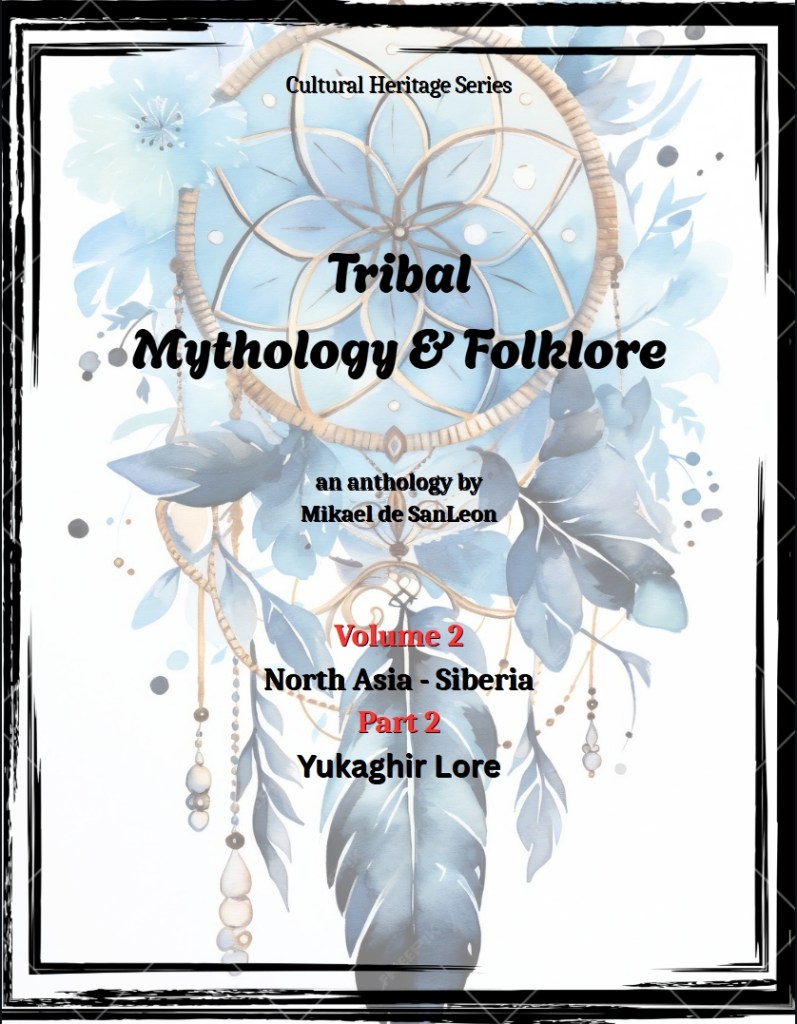
Chuvan, Evens, Koryak & Yupik Lore: the Book

Collector’s Edition

The volume contains the 65 stories from “The Jessup North Pacific Expedition” monography (edited by Franz Boas) and published in the Memoir of the American Museum of Natural History – New York (Volume VIII.3) under the title “The Eskimo of Siberia (by Waldemar Bogoras)” – Leiden & New York, 1913; The American Ethnological Society Publications, Volume V (edited by Franz Boas) under the title “Koryak Texts (by Waldemar Bogoras)” – E. J. Brill – Leyden, 1917; The American Museum of Natural HistoryAnthropological Papers, vol. 20, part 1 under the title “Tales of Yukaghir, Lamut, and Russianized Natives of Eastern Siberia (by Waldemar Bogoras)”, New York, 1918. Although the stories are published in our site, this volume contains additional information, notes and comments from the authors.
Free access to all our supporters.

Yukaghir Lore: the Book

Collector’s Edition

The volume contains the 53 stories from The American Museum of Natural History series and published in the “Anthropological Papers” (Vol. 20, Part 1) under the title “Tales of Yukaghir, Lamut, and Russianized Natives of Eastern Siberia (by Waldemar Bogoras)” – New York, 1918. Although the stories are published in our site, this volume contains additional information, notes and comments from the authors.
Free access to all our supporters.

Story of the fox and the wolf

This is the usual Old World story telling how Fox pretended to fish through a hole in the ice, and then tempted Wolf to do the same: wolf lost his tail in the Ice. Fox feigned death, and was picked up by a passing farmer, etc. I give here only an episode which seems of local character.

Source
Tales of Yukaghir, Lamut, and Russianized Natives of Eastern Siberia
by Waldemar Bogoras
The American Museum of Natural History
Anthropological Papers, Vol. 20, Part 1

New York, 1918


► Themes of the story

Cunning and Deception: The narrative centers on the fox’s use of deceit to achieve her goals.

Conflict with Nature: The characters’ interactions with natural elements, such as the icy environment, play a significant role in the tale.

Moral Lessons: The story imparts lessons about the consequences of deceit and gullibility.

► From the same Region or People

Learn more about the Chuvan people


Told by Mary Alin, a Russianized Chuvantzi woman. Recorded by Mrs. Sophie Bogoras in the village of Markova, the Anadyr country, winter of 1900.

The man pursued Fox with dogs, but Fox succeeded in plunging into the nest of a polar Owl. [Some of the nests of these large owls are said to be placed within hollow trunks of trees, or among piles of driftwood which are found at certain places all along the arctic coast.] The man chopped at the trunk with his heavy ax.

“O gossip! I want to fly out.”

“Ah, gossip! do as if you have too; but before doing so please pass water upon my neck,” said the Fox.

Owl passed water upon Fox’s neck. When the man caught Fox by the neck, she slipped out of his fingers and ran off. The dogs followed her. She ran to and fro, until she was tired.

Then she called to Owl, “O gossip! teach me how to fly.”

► Continue reading…

“All right! Sit down on my back!”

The owl alighted and carried off Fox. They flew up high into the air.

“Oh dear!” said Fox. “I know how to fly, but I do not know how to alight.”

Owl pretended to throw her down. “O Lord! let it be upon the moss! O God! let it be upon a soft place!”

Owl threw her down and Fox was killed.


Running and expanding this site requires resources: from maintaining our digital platform to sourcing and curating new content. With your help, we can grow our collection, improve accessibility, and bring these incredible narratives to an even wider audience. Your sponsorship enables us to keep the world’s stories alive and thriving. ♦ Visit our Support page

Story of heretics with iron teeth

Three brothers, married to three sisters, go to check their traps, leaving their wives and children behind. The middle sister repeatedly claims their husbands are returning early, but the others dismiss her. When the men arrive, the youngest sister notices their unusually black teeth, which grow long and sharp. She flees, lures one man into a trap, and kills him. When the men search, they find the women gone, and the fate of the captives remains unknown.

Source
Tales of Yukaghir, Lamut, and Russianized Natives of Eastern Siberia
by Waldemar Bogoras
The American Museum of Natural History
Anthropological Papers, Vol. 20, Part 1

New York, 1918


► Themes of the story

Cunning and Deception: The youngest sister employs clever tactics to deceive and ultimately defeat the heretic, showcasing her resourcefulness in a perilous situation.

Family Dynamics: The narrative centers on the relationships between the three sisters and their husbands, highlighting trust, communication, and the protective instincts that arise in times of danger.

Moral Lessons: The tale imparts lessons on vigilance, quick thinking, and the importance of trusting one’s instincts when faced with unfamiliar or threatening situations.

► From the same Region or People

Learn more about the Chuvan people


Told by Mary Alin, a Russianized Chuvantzi woman. Recorded by Mrs. Sophie Bogoras, in the village of Markova, the Anadyr country, winter of 1900.

There were three brothers who were married to three sisters. The oldest brother was married to the eldest sister, the middle brother to the middle sister, and the youngest brother to the youngest sister. When fall came, they set off to examine their deadfalls. Their wives and children stayed alone in their settlement.

The eldest sister had three children, the middle sister, had only one, and the youngest, none at all.

One day the middle sister, who had been outside, came back saying, “Our husbands are coming home.”

The other said, “Why, it is too early. You are mistaken.” She ran out again, and instantly came back: “Our husbands are coming home.” So the others were quite angry. “Stop talking! Nobody is coming. It is sinful to talk such nonsense.”

► Continue reading…

But she would not obey, and repeated the same thing. In the evening, after sunset, they heard the rattling of runners and the yelping of dogs. Sleigh-bells jingled merrily, and voices rang with laughter. Their husbands were coming back from the forest. Oh, they felt quite joyful, and busied themselves getting supper ready. The eldest sister prepared tea for them; the middle sister brought in plenty of meat, and cooked the meal; the youngest sister had nothing particular to do. She looked at them from the sleeping compartment through a chink in the partition. All at once she noticed that the teeth of the men were quite black.

She was astonished, and said to the middle sister, “Ah! sister dear, why is it that our husbands have such black teeth?”

“Oh, don’t!” retorted the other one. “They are our own husbands. What can we say about their teeth. Maybe they have eaten some blackberries in the forest.”

“It is cold weather now. There are no blackberries.”

“Perhaps you gave them burnt meat.”

“It is you who gave them meat, and it was juicy and not burnt.”

“Or perhaps it is because they have iron teeth.”

At this time, the teeth of the men were half a foot long. They protruded from their mouths, sharp-edged, and bright like so many daggers. The youngest sister rushed out of the house.

“Catch her, catch her!” cried the middle sister, but she was gone.

She ran through the dense forest straight on, like a frightened doe; and in the end when she could run no more, she stopped at a small opening and started a fire. She found the stump of a tree that was similar to her in bulk and size. She cut it off and put it near the fire. She took off her clothes and wrapped them around the stump. She also put her cap on it. Then she took a stake as strong as a spear shaft and burnt its point in the fire until it became hard and sharp. With this wooden spear she concealed herself behind a bush. Oh! a noise was heard in the forest, a gnashing of teeth, and cracking of branches, which snapped off and fell down. It was the heretic coming in pursuit of her. He rushed toward the fire, and with his terrible jaws he instantly seized the stump about the middle. His iron teeth stuck in the wood and he could not disengage himself. The woman sprang from the bush and stabbed him from behind with her wooden lance. The burnt point entered his anus and came out at the mouth. He was there like a fish on a roasting rod. She ran the other end of the stake deep into the ground, and left him there. She was afraid to return home, and went to another settlement not far away. When she had told her story the men took their spears and axes and went in search of the monsters. When they came to the house, the heretics had gone. The women and children had also gone. They looked for the bones, supposing that the monsters might have eaten the people, but they found nothing: It is not known what they did to their captives. Perhaps they carried the women away and married them. The real husbands of the women came home after a week, but their house was empty.

The end.


Running and expanding this site requires resources: from maintaining our digital platform to sourcing and curating new content. With your help, we can grow our collection, improve accessibility, and bring these incredible narratives to an even wider audience. Your sponsorship enables us to keep the world’s stories alive and thriving. ♦ Visit our Support page

Story of Gege-woman

An old man warns his three sons not to climb the roof, but the eldest and middle sons ignore him and both meet Gege-Woman, who catches fish with her breeches. They each reject her food and are devoured by wolves, bears, and wolverines. The youngest son, however, marries her, and with his father’s help, traps the beasts. Gege-Woman chases him, but after a fight with another woman, both die. The son and his family become rich.

Source
Tales of Yukaghir, Lamut, and Russianized Natives of Eastern Siberia
by Waldemar Bogoras
The American Museum of Natural History
Anthropological Papers, Vol. 20, Part 1

New York, 1918


► Themes of the story

Supernatural Beings: Gege-Woman herself is a supernatural entity capable of summoning wolves, bears, and wolverines to enforce her will.

Trials and Tribulations: The youngest son’s journey involves overcoming the peril posed by Gege-Woman, surviving her pursuit, and ultimately leading his family to prosperity.

Conflict with Authority: The sons’ decision to ignore their father’s explicit warning highlights a classic struggle between youthful defiance and parental authority, resulting in severe repercussions for the elder siblings.

► From the same Region or People

Learn more about the Chuvan people


In Russian, Гегйка Баба which probably means “woman who cried ‘gege’!

Told by Mary Alin, a Russianized Chuvantzi woman. Recorded by Mrs. Sophie Bogoras, in the village of Markova, the Anadyr country, winter of 1900.

There was an old man and his wife. They had three sons. The old man said to his sons, “Listen, my children! Do not climb the roof, do not climb to the upper beam.” The next morning the elder son climbed to the roof and mounted the upper beam. He saw from there, on the seashore, that a young woman was catching fish with her own breeches. He descended and went to the shore. Gege-Woman was there catching fish with her breeches. “Ah, you have come!” — “Yes, I have.” — “Do you want to take me for your wife? If so, I will cook some food for you.” — “All right!”

They went home. Gege-Woman cooked some fish, and offered it to her future husband; but he pushed it off, and the fish fell to the ground. “Who wants to eat of your nasty fish, Breeches-Caught?” He left the house; but Gege-Woman followed him, and called aloud, “Gege, wolves, gege, bears, gege, wolverines, poz, poz, poz!” [one of the calls addressed to the dog-team] So the wolves, the bears, and the wolverines came and devoured him. The old man had lost the first son.

► Continue reading…

The second son, mounted the roof, and saw Gege-Woman catching fish with her breeches. He went the same way, and came to the shore. “O young man! take me for your wife. If you are willing, I will cook some food for you.” — “All right!” They went home, and she cooked some fish and offered it to her visitor; but he pushed it off. “Who wants to eat of your nasty fish, Breeches-Caught?” He left the house; but she followed him, and called aloud, “Gege, bears, gege, wolves, gege, wolverines, poz, poz, poz!” Bears, wolves and wolverines came and devoured him. The old man had lost his second son.

The third and the youngest son mounted the roof, and saw Gege-Woman. He went to the seashore. “O young man! take me for your wife. I will cook some food for you.” “All right!” He ate of the food. So they lived together. She forbade the bears and the wolves to devour the young man. Meanwhile the old man built a number of deadfalls and other traps. He caught all the bears and wolves and wolverines one by one. Then he said to his boy, “You may go away. There is nobody left to destroy you.” That very night he fled from there. Gege-Woman followed him. He saw a small stream of smoke coming out of the ground, and plunged down. It was the underground house of Haihai-Woman. [in Russian Гайгайка Баба “woman crying ‘hai, hai!’”] “Oh, oh I give me back my husband!” “I will not. He shall be mine.” So the two women fought and killed each other. He went out, and fled to his parents’ house. They visited the houses of the dead woman, and took everything there was. So they grew rich.

That is all.


Running and expanding this site requires resources: from maintaining our digital platform to sourcing and curating new content. With your help, we can grow our collection, improve accessibility, and bring these incredible narratives to an even wider audience. Your sponsorship enables us to keep the world’s stories alive and thriving. ♦ Visit our Support page

 Story of Magus

Magus had four sons with strange characteristics. After an elk hunt, two sons die from accidents while fetching water, the third while handling the elk’s brisket, and the fourth while cooking the meat. Magus, now alone, travels and kills the children of an evil spirit named Kosetoka. Kosetoka, enraged, attacks Magus, but the latter outwits him, using a trick to kill the spirit. Magus returns home victorious.

Source
Tales of Yukaghir, Lamut, and Russianized Natives of Eastern Siberia
by Waldemar Bogoras
The American Museum of Natural History
Anthropological Papers, Vol. 20, Part 1

New York, 1918


► Themes of the story

Family Dynamics: The narrative centers on Magus and his four sons, highlighting their unique characteristics and the tragic events leading to their demise.

Cunning and Deception: Magus employs clever tactics to deceive and ultimately defeat Kosetoka, showcasing the use of intelligence over brute force.

Revenge and Justice: Following the loss of his sons, Magus embarks on a journey that leads to the defeat of Kosetoka, symbolizing a form of personal renewal and triumph over adversity.

► From the same Region or People

Learn more about the Chuvan people


Told by Mary Alin, a Russianized Chuvantzi woman. Recorded by Mrs. Sophie Bogoras in the village of Markova, the Anadyr country, winter of 1900.

There was a man, Magus by name. He had four sons. One of them had legs of grass, another a head of bladder, the third a brisket of leaves, the fourth a voice of hair. Magus said to his sons, “Children! let us go and hunt elks!” They killed a big elk and carried it home. Magus said to the elder sons, “You, Legs-of-Grass I and you, Head-of-Bladder! — go and bring some water from the river.”

They went to the river and put the water tub near the water-hole; but they were so slow in filling it with water, that it was frozen to the moist ice. They tugged at it, but could not move it. Then Legs-of-Grass kicked it with his foot. He broke both of his legs and was dead. Head-of-Bladder was much troubled, and scratched his head. His nails cut through the bladder, and he dropped down dead. The other ones waited and waited, but nobody came: so they went to the river, and found the two dead.

► Continue reading…

“Ah!” said their father, “let us arrange their funeral! We will cook a funeral meal. Brisket-of-Leaves go and bring the elk’s brisket from the drying-poles.” He wanted to take it down, but it slipped from his hands and fell down upon his own brisket and smashed it. He also dropped down dead. “Ah, woe! what is to be done?” — “Now, you must go, Voice-of-Hair, and fetch that brisket.” Voice-of-Hair brought it and cooked it; but when he was tasting the meat, his throat of hair burst open, and he died. So Magus remained alone.

“Now, I will depart from here. I will go traveling.” He walked on for several days and came to Kosetoka. The evil spirit was not at home: only his children were there. He killed them all, and cut off their heads. Then he spread a large blanket, and set the heads close to it, in a row. It looked as if they were asleep side by side under the blanket. He also took a large bag and filled it with their meat and bones. He wrapped the bag in his own overcoat, and attached his cap to one end of it. Kosetoka went home carrying some human carrion as food for his children. “Ah!” said he, “they waited so long that they have fallen asleep.” He made a fire and cooked the meat; but when he tugged at the blanket, the heads rolled off and out of the house. Kosetoka was wild with anger. “Who has done this?” He looked about and saw the bag. “Ah! it was you, Magus! it was you!” He rushed at the bag and trampled it down with his heavy feet. All the bones broke, and the blood of the children spurted through the holes. “I have killed YOU!” shouted the spirit; but from underground a voice answered, “I am here.” It was Magus, who had found the underground storehouse and entered it, blocking the entrance behind him. “Ah! where are you?” — “I am here.” The spirit ran out of the house and back again. The entrance was blocked; but he found a round hole, and tried to squeeze himself through it. His body was tightly wedged in and could move neither forward nor backward. Magus said, “O hole! you are round and tight, turn now into a circular knife and cut Kosetoka in halves.” And thus it happened. He took everything he found, and went home.


Running and expanding this site requires resources: from maintaining our digital platform to sourcing and curating new content. With your help, we can grow our collection, improve accessibility, and bring these incredible narratives to an even wider audience. Your sponsorship enables us to keep the world’s stories alive and thriving. ♦ Visit our Support page

Story of a stepmother and her stepdaughters

An old man remarries a Yahga-Witch, who treats his daughter cruelly. One day, the girl is sent to wash a net but the current sweeps it away, leading her to the lower world. She cleans a stable, barn, and house, where an old woman helps her, giving her a silver net and a magical box that provides food. The Witch’s daughter follows the same path but opens a box that burns them both. The old man and his daughter then live with the kind old woman.

Source
Tales of Yukaghir, Lamut, and Russianized Natives of Eastern Siberia
by Waldemar Bogoras
The American Museum of Natural History
Anthropological Papers, Vol. 20, Part 1

New York, 1918


► Themes of the story

Trials and Tribulations: The stepdaughter faces numerous challenges, including the loss of the net and her subsequent journey to the lower world, testing her resilience and character.

Moral Lessons: The contrasting behaviors and outcomes of the stepmother’s daughter and the stepdaughter impart lessons on the virtues of kindness, diligence, and humility versus laziness and entitlement.

Supernatural Beings: The presence of the Yahga-Witch and the old woman in the lower world introduces elements of the supernatural, influencing the events and outcomes in the story.

► From the same Region or People

Learn more about the Chuvan people


Told by Mary Alin, a Russianized Chuvantzi woman, in the village of Markova, the Anadyr country, winter of 1900.

There was an old man and his wife. The old woman died leaving a single daughter. The old man sought another wife, and married a widow, who had a daughter of her own. This widow was a Yahga-Witch. The stepmother had a violent dislike for her stepdaughter. She used to strike her hard and gave her nothing to eat. One day she sent her to the waterhole to wash some old nets. [Old nets are used in the households of the Russian and the Russianized natives instead of towels and napkins.] While the girl was washing it the swift current carried it away. She cried bitterly. Then she looked down the water-hole and saw a road. She descended and came to the lower world. She walked and walked, and then saw a horse stable. Several horses stood in it, and the place was quite unclean. So she cleaned it well, plucked some grass from under the snow among the tussocks, and brought it in for fresh litter. Then she continued on her way.

► Continue reading…

After a while she saw a cow barn. Several cows stood there. The barn was more filthy than the preceding one. She cleaned it well, and brought in some grass for fresh litter. Then she milked the cows and went away. After some time she came to a little house. It was so dirty that the rubbish covered the sill. She entered and cleaned the house. Then she made a fire and sat down on the bed. Sitting thus alone, she cried bitterly. All at once a noise was heard outside, and the shuffling of old feet clad in bristle-soled boots. There entered a small old woman. “Ah, my dear! whence do you come?” — “I have no mother. The Yagha-Witch was very hard on me. She sent me to the water-hole to wash an old net, and the current of water carried it off. So I thought, ‘She will surely kill me. I may as well descend to the lower world of my own free will?’” — “All right!” said the old woman, “you may pass this night in my house; and in the morning I will give you a net to make good your loss.”

In the morning the old woman gave her a net made of pure silver and also a small box with an iron cover. She said to the girl, “Give this net to the Yagha-Witch. She will thank you for it ever so much. You must keep the box for yourself. Everytime you feel hungry, you may call your father. Then open that box unseen by your stepmother. The box will give you-food and drink.” She took the presents and went home. She gave the silver net to the Yagha-Witch. Oh, the witch was so glad! She called her own daughter and gave her a piece of a new net, quite clean and white. Then she said, “Go to the water-hole. Perhaps they will give you something too.”

The daughter of the Yagha-Witch came to the water-hole. She washed the net. The current carried it off. She looked down the water-hole and saw a road. She followed it and came to the lower world. After some time she saw the horse stable. Several horses stood in it, and the place was unclean. The girl grumbled, “Oh, what a filthy place!” and passed by. Then she saw a cow barn. Several cows stood in it, and the place was dirtier than the preceding one. She passed by with much aversion. After that she came to the little house. It was so full of dirt that the rubbish covered the sill. “Oh, what awful dirt!” said the girl. She entered, however, and she sat on the bed in the cold and among the heap of rubbish, singing lustily. The old woman came in, and asked, “Oh, my dear! where do you come from?” — “My mother sent me to wash a net, and the current carried it away. I looked down the water-hole and saw a road. I followed that road and came here.” The old woman gave her a net, the very same she had dropped into the water-hole, and also a large box with a cover of larch wood. She warned her also, “Be sure not to open this box in the presence of anyone! You must open it only when you and your own mother are together.” The girl went back and came out of the water place. “Mother,” she called to the Yagha-Witch, “I have a box, ever so large.” — “Do not open it, will you?” said the mother. They took the box and hid beneath a bush. Then she opened the lid. A flame came out and burnt them both. So they were destroyed. The old man and his daughter left that place and departed for the under world. They came to the old woman. The old man married her, and they all three lived together.

The end.


Running and expanding this site requires resources: from maintaining our digital platform to sourcing and curating new content. With your help, we can grow our collection, improve accessibility, and bring these incredible narratives to an even wider audience. Your sponsorship enables us to keep the world’s stories alive and thriving. ♦ Visit our Support page

A Markova tale

A shaman visited a village where people mysteriously vanished nightly. Keeping watch, he discovered a black dog attacking a man, severing his arm. The shaman killed the dog, accidentally attaching its limb—revealed to be a woman’s arm—to the man. Tracking the dog’s trail, he uncovered the village priest’s wife as the culprit, who had been using dark magic to destroy the villagers. She was executed for her deeds.

Source
Tales of Yukaghir, Lamut, and Russianized Natives of Eastern Siberia
by Waldemar Bogoras
The American Museum of Natural History
Anthropological Papers, Vol. 20, Part 1

New York, 1918


► Themes of the story

Supernatural Beings: The narrative features a shaman and a woman capable of transforming into a black dog, indicating interactions with supernatural entities.

Cunning and Deception: The priest’s wife deceives the villagers by secretly transforming into a dog to harm them, highlighting themes of deceit.

Divine Punishment: The shaman uncovers the priest’s wife’s malevolent actions and ensures she faces retribution for her transgressions.

► From the same Region or People

Learn more about the Chuvan people


Told by Mary Alin, a Russianized Chuvantzi woman. Recorded by Mrs. Sophie Bogoras, in the village of Markova, the Anadyr country, winter of 1900.

The people of a village began to vanish, and nobody knew what happened to them. There was a shaman. He traveled through that country and came to the village. The people were quite sad and sorrowful. “What is the matter with you?” — “We do not know. Every night somebody vanished. We have tried to watch, but cannot discover anybody.” — “Oh, is that so? Let me try to keep watch over you.” Evening came, and it was time to go to sleep. The people were hiding in boxes and bags. “Oh, have no fear! I shall keep a vigilant watch over you.” He took a sword and waited in the darkness. The people snored soundly, partly freed from their fear. All at once a black dog glided noiselessly in through the window and seized a workman, a fellow-traveler of the shaman. He struck the dog with his sword. The dog had torn off the man’s one arm with the shoulder blade, and the shaman cut off the corresponding limb of the dog. In the hurry of the moment, the shaman took the limb of the dog and applied it to the body of the man, and it stuck to his body.

► Continue reading…

In the morning he saw that the new arm was not the leg of a dog, but a woman’s arm, white of skin and with rings on the fingers. “Ah!” said the shaman, “let me try to find that dog.” He went out and followed the bloody tracks. They led to the house of the chief of the village close to the church. It was the house of the parish priest. The shaman entered, and saluted the priest with civility. The priest looked sad, “Ah, my friend! please sit down! I am not able to treat you as is becoming. My wife is sick.” — “Ah, is that so! And what is the cause of her suffering?” — “We do not know. She is alone in her room and does not want us to enter. All we know is that she is not well. Please do help her if you can!” The shaman went to the room of the patient. The entrance was locked; he said nothing and suddenly broke the door and entered.

The woman was lying on the bed well wrapped up in a thick blanket. He pulled that off, and she lay before them quite naked. Her right arm was gone, along with the shoulder blade. Close to her side lay the bloody arm of a man, which would not stick to her body. “Ah, here you are!” said the shaman. “Reverend father, it is your wife who destroyed half of the village. Had it not been for me, she would have taken you also.” — “Ah, ah!” exclaimed the priest, “Mother what is the matter with you. Now, I understand it. She would give me of her enchanted drink, so that I slept throughout the night like one dead, and she would steal away in the darkness.” So they took her and tore her in two.


Running and expanding this site requires resources: from maintaining our digital platform to sourcing and curating new content. With your help, we can grow our collection, improve accessibility, and bring these incredible narratives to an even wider audience. Your sponsorship enables us to keep the world’s stories alive and thriving. ♦ Visit our Support page

Story about Kundirik

An old couple prayed for a child and named him Kundirik. After a bear demanded the boy as ransom, Kundirik cleverly escaped, killing the bear. He later encountered a man and his three daughters, casting a spell to discipline the rude girls. Marrying the youngest daughter, Kundirik reunited his impoverished parents with his wealthy in-laws, securing a better life for them all.

Source
Tales of Yukaghir, Lamut, and Russianized Natives of Eastern Siberia
by Waldemar Bogoras
The American Museum of Natural History
Anthropological Papers, Vol. 20, Part 1

New York, 1918


► Themes of the story

Cunning and Deception: Kundirik employs clever tactics to outsmart the bear and later uses a spell to discipline the rude daughters.

Trials and Tribulations: Kundirik faces multiple challenges, including escaping from the bear and dealing with the ill-mannered daughters, demonstrating resilience.

Transformation through Love: Kundirik’s marriage to the youngest daughter leads to a positive change in circumstances for his impoverished parents, showcasing how love and union can bring about transformation.

► From the same Region or People

Learn more about the Chuvan people


Told by Barbara Karyakin, a Russian creole woman, at Marinsky Post, the Anadyr country, fall of 1900.

There was an old man with an old woman. One time they prayed to God, asking Him to give them a child. God granted their prayer, and they had a son.

The old woman said, “What name shall we give to the boy?”

“Ah!” said the old man, “let us call him Kundirik.”

The old man went to hunt wild reindeer. When on the way, a bear attacked him and wanted to kill him.

“O grandfather! spare me!”

“Unless you promise to give me your son Kundirik, I shall kill all of you.”

► Continue reading…

He promised to give him the boy and the bear let him go. The old woman saw him come covered with blood: „Ah!” cried she, „My husband is bringing reindeer meat!”

“Do not make so much noise! It is my own blood. The grandfather wanted to kill me. O wife! he asked for our little Kundirik. Otherwise he said he should come and kill all of us.”

The old woman cried much, then she prepared some dolls for the boy. She put him on the window sill, and put the dolls by his side. Then they left the house and departed forever. The Bear came, and entered. “Kundirik, where are you?”

“I am here, outside, playing with dolls.”

The Bear went out. “Kundirik, where are you?”

“I am here, within, playing with the dolls.”

He was on the window sill, now within, and now outside. The Bear broke down the wooden wall and seized Kundirik.

“When we were traveling, father and I, he used to carry me on his shoulders.”

So the Bear put the boy on his shoulders and walked along. They came to a big hole in the ground. Two poles of aspen wood were protruding from it, and a sleeping place made of green branches was arranged on them.

“This is our sleeping place,” said the boy. “We used to sleep here, father in the hole, and I on the branches.”

The Bear entered the hole, and immediately went to sleep. The boy gathered a number of heavy stones and brought them all to the edge of the hole.

“Bear, Bear! are you sleeping?”

“Yes, I am. And are you?”

“I am not. My stomach is aching. I am afraid. I am going to defecate stones.”

Then he pushed the stones, and they fell down and hit the Bear. He was squeezed down, and his bowels came out of his belly.

“Kundirik, Kundirik, help me get out! I will take you to your father and mother.”

“No, I am afraid you will eat me up.”

And the Bear died.

Kundirik left him and went away. He saw a house and entered. In this house lived a man and his three daughters. The father awakened the daughters.

“Get up, daughters! A stranger has come. Give him food and drink.”

“Ah! let him look for it himself!”

He refused to do so, but went out of the house and said softly, “Kundirik! let those girls’ buttocks stick firmly to the flooring!”

In the morning the girls wanted to get up, but the boards of the flooring were lifted along with them.

“Ah!” said the father, “Something has happened. Go and fetch my old mother. She will give me counsel.”

Kundirik went to the old woman, who lived far off, and asked her to come.

“Ah!” said the old woman, “you must first help me with my wraps.” He wrapped her up. “Now you must help me to my sledge.” So he carried her to the sledge. They departed. After a while she said, “Kundirik, now help me defecate.” He put her down and took off some of her wraps. “Kundirik, now help me wipe my anus.”

“There is a horse,” said Kundirik, “go to him, he will clean you.” She approached the horse. The horse seized her naked buttocks with his teeth and tore her in two. Out of her lacerated anus came a quantity of mice, ermine, spermophile, toads, grubs.

Kundirik went to the old man, and said, “The old woman died on the way. She was indeed too old.”

The old man said to him, “Please find help for us if you can!”

Kundirik promised to do so. He went out of the house, and called aloud, “Kundirik! let these girls be detached from the flooring!” He went back and said, “Get up!” and they were free.

They gave him the youngest daughter in marriage. He took her along and went home. His father and mother were living in a small hut. A small fire was burning in this house. A small tea kettle was bubbling over the fire. His parents were full of joy, but he only knit his brows and said nothing. The same day he went back to his father-in-law, who was much better off than his own people. He slept there.

In the morning he went out and called aloud, “Kundirik! let my father and mother come over here!”

And there they were. After a while his father-in-law also went out and saw the new house. “Ah, ah!” said he, “some new people have come here, together with their house.”

The end.


Running and expanding this site requires resources: from maintaining our digital platform to sourcing and curating new content. With your help, we can grow our collection, improve accessibility, and bring these incredible narratives to an even wider audience. Your sponsorship enables us to keep the world’s stories alive and thriving. ♦ Visit our Support page